Equipment selection criteria
For those taking their first steps in snowboarding as well as for more advanced riders, we have prepared a brief gear selection guide. The most important factors when choosing equipment are defining your skill level, the riding style you want to pursue, and your budget. You will find the answers below.
Snowboard
For beginners, we recommend renting a board. This allows you to enjoy your first slides without worrying about damaging gear. You will also get to test several boards, which will later help you make a well-informed investment. Before buying a board, consider a few key questions.
How much experience do you have?
For the purposes of this guide, let’s consider 3 skill levels:
- Beginner: you have never ridden a snowboard before or have only spent a few days on the slopes.
- Intermediate: you feel confident on regular groomed runs and are trying your first jumps.
- Advanced: you ride in all snow conditions and on any terrain, and tricks are second nature to you.
How much do you want to spend?
For beginners, we recommend boards under 1,000 PLN. Intermediate riders can consider boards above 1,000 PLN, and once you feel truly confident, high-end models over 2,000 PLN designed for advanced riders become an option.
As the price increases, so do the board’s performance characteristics. Higher-priced models are built from superior materials and offer markedly better riding dynamics. However, this is mainly appreciated by riders who have spent dozens of days on the snow. Beyond the expense, beginners will notice little difference.
What riding style interests you?
- Freestyle: tricks and airtime in the park.
- Freeride: off-piste riding and complete freedom in backcountry terrain.
- Alpine: high speeds and carving on groomed pistes.
Beginners should pick a board that allows them to try every style. The best option is an All-Mountain board, which performs well in deep powder and on groomers alike, making your first jump far less punishing. Intermediate and advanced riders usually already know what they are looking for.
How long should the board be?
Length is one of the most critical parameters, as riding enjoyment largely depends on it. The starting point is matching board length to your height, but it is not the only factor:
- Short boards, favored by freestyle enthusiasts, reach from the collarbone to the chin.
- Medium boards, suitable for everyone from beginners to advanced riders who enjoy diverse riding styles, reach from the chin to brow level.
- Long boards, extending from forehead height to a few centimeters above the head, are designed for high-speed riding.
Board length selection is also influenced by your weight:
- Lighter riders should choose shorter boards, as longer ones can be difficult to maneuver. Pick the shortest board within the recommended range for your height and riding style.
- Heavier riders should choose longer boards, as shorter boards can feel twitchy and lose stability. Pick the longest board within the recommended range for your height and riding style.
- Riders of average weight should pick boards from the middle of the range.
- Choose shorter boards for freestyle and longer boards for freeride.
- Longer boards perform significantly better off-piste and in deep powder.
How wide should the board be?
Board width is primarily dictated by boot size: the larger the boot, the wider the board needs to be. On a board that is too narrow, your boots will drag in the snow during turns (toe or heel drag), resulting in abrupt and painful falls. On an overly wide board, you will lack precise edge-to-edge leverage, making turns require extra effort. Every board includes recommended boot size guidelines in its specifications.
Helpful tips:
- Wider boards are typically chosen by heavier riders and those with larger boot sizes.
- Narrower boards are suited for lighter riders with smaller feet.
- Always check the manufacturer’s board description for sizing charts.
Key notes:
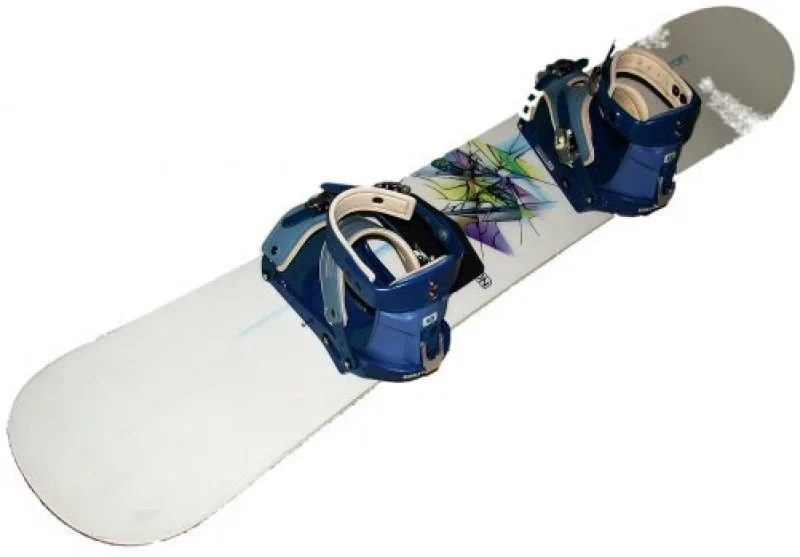
- Every new board comes with detailed specifications: length, waist width, target riding style, and recommended rider profile.
- Ask shop staff for guidance. Reputable shops employ experienced snowboarders who can help match the board to your specific needs.
- Enjoy every moment on the slope and keep your board well maintained.
Bindings
Intended use. Most modern bindings are highly versatile (freestyle and freeride), but discipline-specific models vary in design nuances—mainly the contour and stiffness of the ankle strap, along with highback height and flex.
Fit. The most critical factor is matching the binding size to your boot, as this directly affects board control and protects against foot and ankle injuries. Bindings are sized (e.g., S, M, L), adjusted, and tailored via strap profiles. Once buckled in, the boot should not have excessive side play, the heel must be firmly locked in place, and the upper cuff should sit flush against the highback. Ratchet buckles should allow precise strap tensioning.
Boots
Stiffness (Flex). Flex indicates the boot’s intended riding style, but personal preference also plays a major role. Stiffer, properly fitted boots can reduce the risk of ankle and midfoot injuries. Boot flex is best tested on your foot, as a boot flexes very differently in your hands than when fully laced up. The boot should flex forward, slightly to the sides, but never backward.
Fit. Fit determines both comfort and safety, making it the most important attribute of any boot. It depends on the lacing system and liner materials. Boots must be neither too large nor too small. To achieve the right fit:
- use dedicated snowboarding socks, preferably relatively thin,
- ensure your toes reach close to the front of the liner, allowing better force transfer to the board’s toe edge,
- select a size that feels “slightly snug,” particularly in width, as boots pack out over time—more so with thicker liners. Proceed with care, as excessively tight boots cause midfoot pain and cold toes,
- check that your heel remains locked down and does not lift off the footbed when bending your knees and driving forward into the tongue,
- whenever possible, choose heat-moldable liners and a reliable inner and outer lacing system.
Modern insulation materials allow liners and socks to be thinner. This delivers a more precise fit, improved board feel, and a smaller overall boot footprint.
Looking to learn how to snowboard or refine your technique? We invite you to snowboard lessons with an instructor at Harenda. If you are also planning to ski, check out our guide on how to choose ski equipment properly.