Beginnings are never easy. Mastering skiing technique is one thing, but knowing how to fall safely is just as important. A controlled fall can prevent injury and make you feel much more confident on the slopes. Here is how to prepare for a loss of balance and the key rules you should know.
Why is learning how to fall on skis important?
On skis, our movement control is limited and we navigate slippery, snow-covered terrain, making the risk of a spill high. Interestingly, a fall does not always have to be accidental. When an obstacle suddenly appears on the run and cannot be avoided, an intentional fall is better than an uncontrolled crash.
A skier who knows how to fall safely avoids fractures and sprains much more easily, thereby gaining greater confidence on the slopes. Beginners should practice this in controlled conditions so that they can remain calm in sudden situations.
How should you fall on skis?
It is best to learn this under the watchful eye of an instructor. During private lessons and courses at HSKI, we practice not only skiing itself, but also falling safely and getting back up.
When you lose your balance, stay calm and try to regain it. If that is not possible, keep these rules in mind:
- Lower your center of gravity. Bend your legs and crouch down to get closer to the snow and cushion the impact.
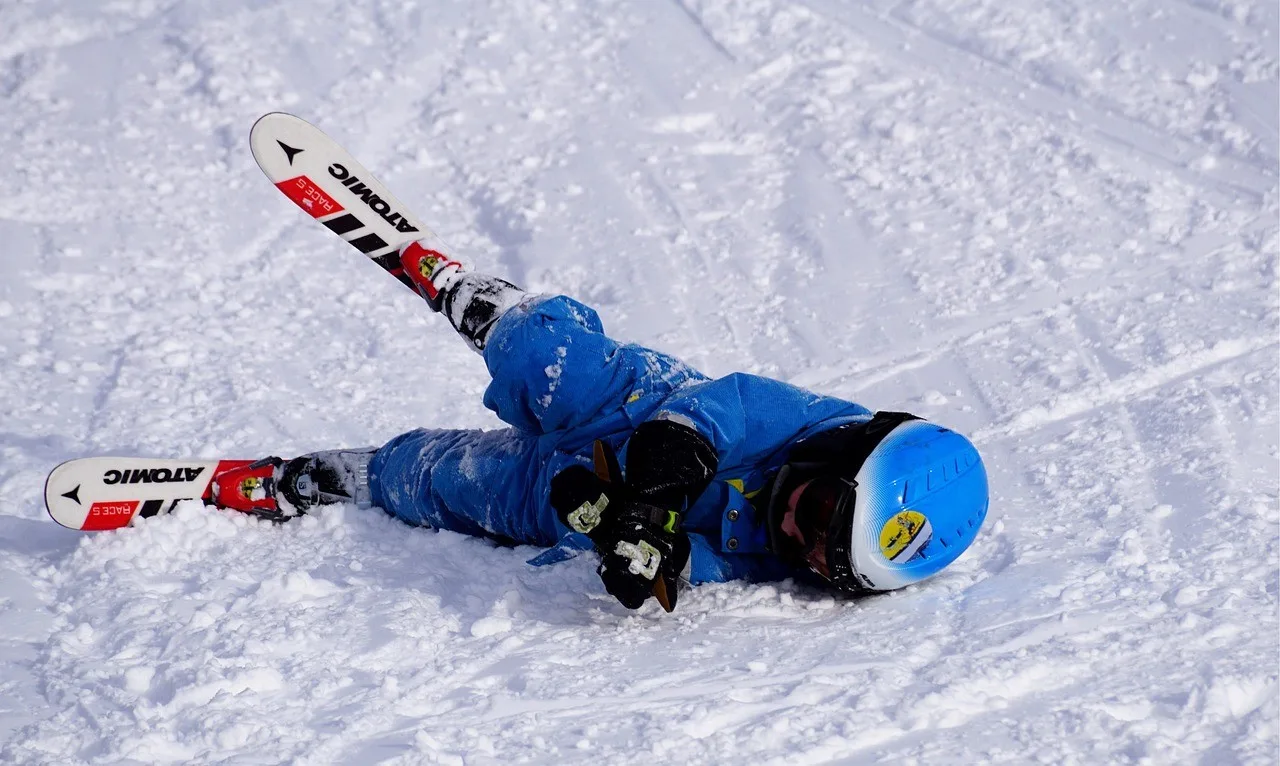
- Fall to the side, onto your hip and buttock, rather than forward or onto your back. This protects your head and knees.
- Do not brace yourself with outstretched arms. Falling onto open hands is a direct path to wrist or elbow injuries. Keep your arms bent and close to your body.
- Do not try to force a recovery at the last second, as unnatural twisting of the leg is a frequent cause of knee injuries.
Can you avoid falling on skis?
Even a well-practiced fall can result in an injury, so prevention is always best. The most important things are to stay calm, which gives you better body control, and to keep your speed in check. Staying aware of your surroundings and slope conditions also helps immensely. Equipment matters just as much: securely buckled boots and skis matched to your height and ability provide effortless control. Read more about this in our guide on how to choose ski equipment properly.
Falls can be stressful, but regularly practicing the right instincts helps you feel far more confident on the snow. Contact us to schedule your first training session.