Can skiing help a child in school? This topic was tackled by Frieder Beck, a sports scientist, German national freestyle ski team coach, and brain researcher. He analyzed numerous studies and tested some theories in practice to show that skiing positively influences children’s academic performance. His motto has become well-known in the sporting world: “Movement makes you smart.” We took a closer look at his theses.
Movement makes you smart
A study of 4,500 primary school pupils who participated in extra physical activities for a year showed a clear improvement in their performance, including in mathematics and foreign languages.
Similar conclusions were drawn from a long-term study of 5,000 eleven-year-olds whose daily physical activity, ranging from moderate to vigorous, was measured using sensors. The academic results of active children noticeably improved in subsequent years.
Frieder Beck sees the key to success in so-called executive functions, specifically in self-regulation. Focus is essential in school and at work to achieve goals, memorize information, and work effectively. And sports foster concentration.
The sport of skiing makes sense
Beck asked the question: how can these principles be promoted among children? He seeks the answer in winter sports, especially skiing, which quickly turns into pure fun for little ones. In just a day or two, a child learns the basics, and training transforms into a positive experience. The joy of skiing makes them say, “Mom, I want to do it again!” Add to that mountain air, scenic views, and sparkling, powdery snow, all of which provide tremendous motivation.
Beck’s findings are confirmed by Dr. Hubert Hörterer, an expert from the German Ski Association. During the association’s congress in Rottach-Egern, he stated that sports have a beneficial effect on metabolism and stress management, and that active sixty-year-olds are more physically fit than inactive forty-year-olds.
President of the German Ski Instructors Association Wolfgang Pohl describes modern instructors as “development coaches” who teach not only technique, but also physical activity and a healthy lifestyle. “Winter sports are good for children. They achieve significantly better results in school,” he says.
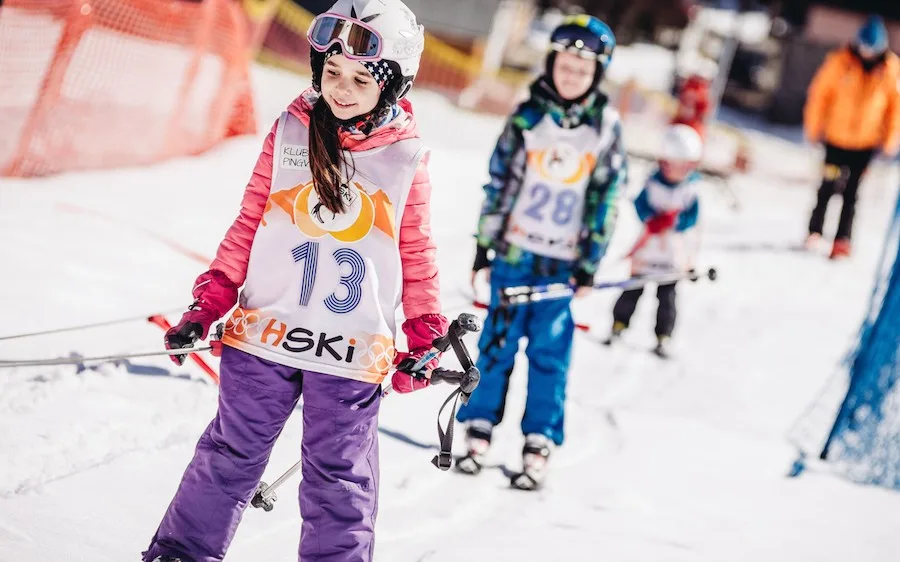
Synapses are responsible for success
According to the researcher, intelligence quotient is difficult to improve through exercise, but our performance increases when we exercise regularly and stimulate the brain regions responsible for executive functions. The learning and motivation system is also activated in the process.
What happens in the brain during learning? Beck explains the role of synapses—the connections that transmit information between nerve cells. Learning means that synapses multiply, grow, and change their properties depending on how often we use them. Movement increases levels of BDNF (brain-derived neurotrophic factor) and dopamine secretion. Beck calls this “fertilizer for the brain,” and his recipe is simple: synapses love sports, and for children, this is invaluable.
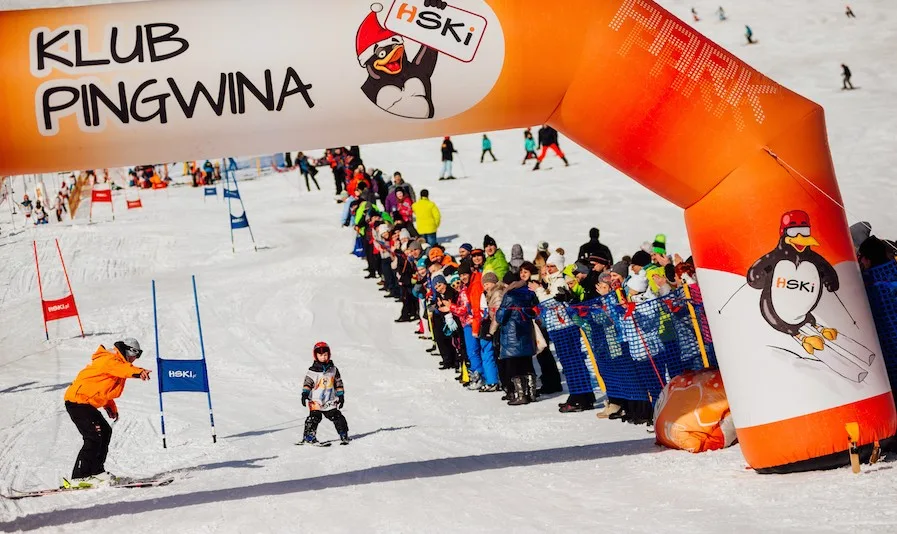
Winter sports are good for children
Beck’s research shows that outdoor physical activity yields major benefits. Contact with nature and physical activity bring satisfaction and support the development of young people, especially their minds.
What do you think? The easiest way is to see how your child learns after regular physical activity. Our experience shows that children are more focused after activity, which only reaffirms Beck’s theories.
We warmly recommend winter sports, as it is easy to fall in love with them. Combining exercise with the beauty of Podhale makes for an ideal time for both children and adults. For 23 years, HSKI has been supporting children’s development at the Penguin Club in Zakopane and the Penguin Club in the Alps. Check out our courses for children.
Source: blogkobiet.pl